WHO WE ARE:
The Portage Lake Pioneers compete in a full contact hockey league that is affiliated with USA Hockey.
The Great Lakes Hockey League is composed of 10 teams throughout the Midwest (Wisconsin and Michigan). The league was established in 1937, formely known as the Badger State Hockey League.
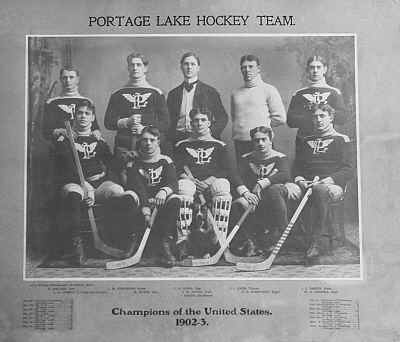
The Pioneers are one of the oldest hockey teams in the sport, being founded early on of the 20th century (est 1903).
The team plays its home games in Houghton, Michigan at the historic Dee Stadium.
The Pioneers proudly carry on 100+ years of hockey legacy in the birthplace of professional hockey.
The Pioneers are a Domestic Nonprofit Corporation and are ran by members of the team.
Learn more about the Great Lakes Hockey League
Learn more about the birthplace of professional hockey and the Pioneers history by visiting cchockeyhistory.org.
John "doc" gibson
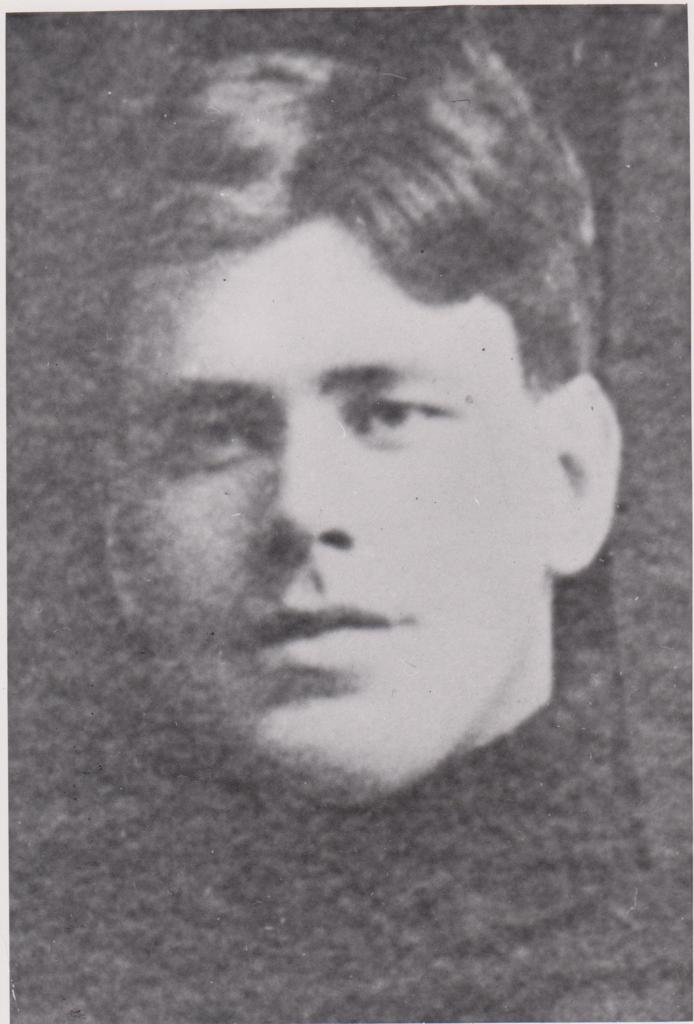
Gibson, a graduate of the Detroit Medical School, was a fine player in Canada and was prevailed upon by the late Merv Youngs, then a cub reporter and later editor of the Houghton Mining Gazette, to join the Portage Lake (Houghton-Hancock) organization. Gibson was a native of Berlin, Ontario, now Kitchener.
The new hockey team, fashioned by the late James R. Dee, was built around Gibson as captain. It was called the Portage Lakers. Their fame reached into Canada and soon they had gained recognition for the roughest, toughest hockey in the world. In 1902-03, a four-team league flourished in the Upper Peninsula (Houghton, Hancock, Laurium, and American Sault). Then in 1903-04 Canadian players began drifting into the Cooper Country, including such greats as Riley Hern, Hod and Bruce Stuart and Cyclone Taylor. Gibson was instrumental in farming these players into the first professional league in the world, the International Hockey League of which Portage Lake was a member.
Gibson was the team's leading scorer, although there is no record of his exact number of goals. The 1903-04 Portage Lake team was perhaps one of the greatest hockey teams of all times. In 26 games it scored 273 goals and allowed only 48. Only twice were they defeated – by American Sault, 7-6, in the regular season and by Pittsburgh, 5-2, in U.S. playoffs. Then the Lakers won from Pittsburgh, 5-1 and 7-0, for the American championship.
Later, at Houghton where over 5,000 fans packed the Old Amphidrome, Portage Lake defeated the Montreal Wanderers, 8-4 and 9-2, to lay claim to the world championship. Other teams which bowed to the Portage Lakers were St. Paul, Detroit, Grand Rapids, Cleveland St. Louis and the Canadian Sault.
In the spring of 1905, Portage Lake sent word to the Stanley Cup Committee Board of Governors challenging the Ottowa Silver Seven to a championship series and in 1906 they did the same to Montreal. Both refused. It was then, that the Canadian clubs signed away the great Portage Lake players and Gibson returned to Canada to enter the medal profession.
Doc Gibson was inducted into the United States Hockey Hall of Fame as an Administrator.
Original Article
Portage Lakers
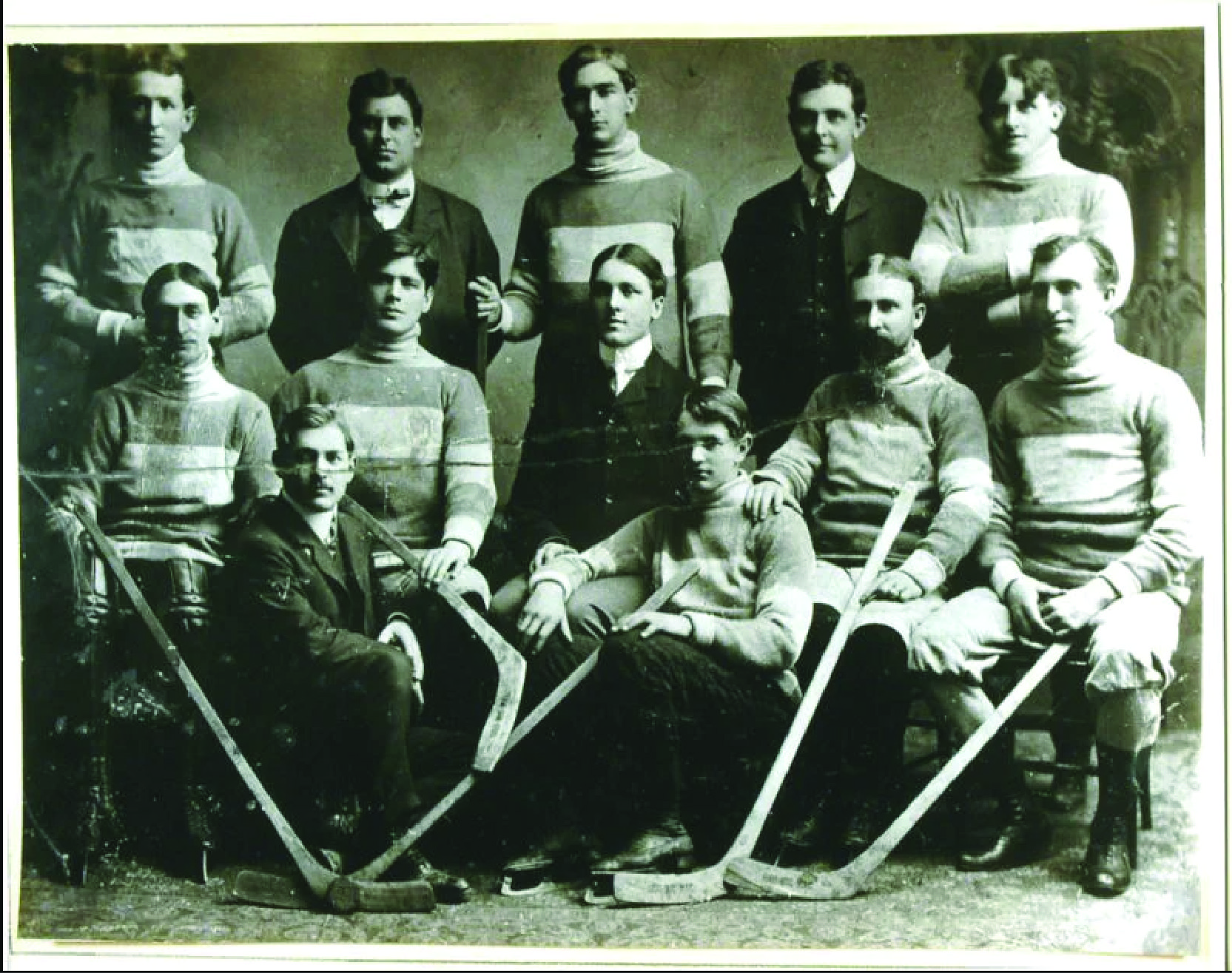
A team known as the Portage Lakers which formed in 1899 had pretty much dominated the Hockey scene for years.
Mostly composed of Canadian imports who were too good to play as amateurs in their Amateur Canadian Leagues.
By 1904 (IPHL), they were fully paid.
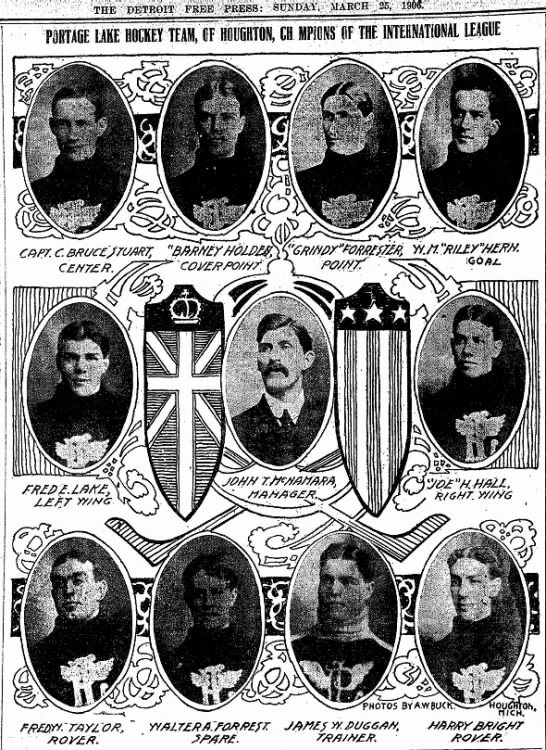
In 1904 as Champions of America, they played off against the Montreal Wanderers for the world championship winning decisively by scores of 8-4 and 9-2 becoming the World Champions.
.jpg)
.jpg)
By 1905 they issued a Stanley Cup Challenge to the Ottawa Silver Seven (Senators) but were denied due to their professional status.
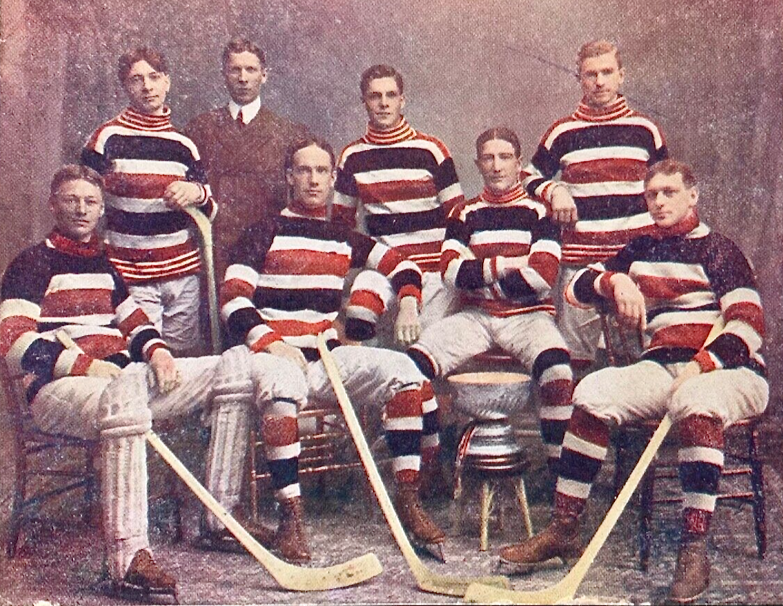
Again in 1906 they were denied a challenge by the Stanley Cup holding Wanderers. With this, the Lakers and pro league dissolved by 1907.
Copper Country Hockey History 1904-1907
Portage Lake Teams 1899-Present
Amphidrome-dee stadium
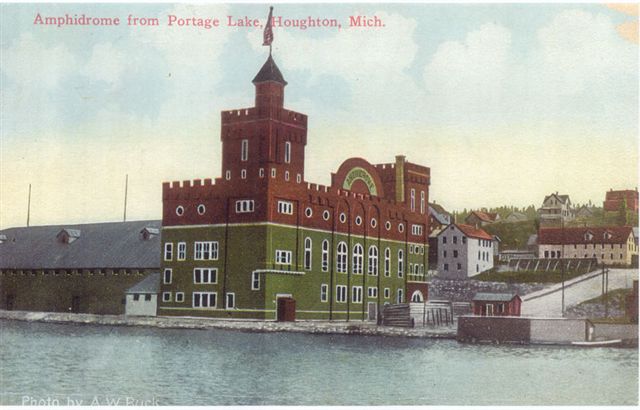
The Original Amphidrome 1902-1927
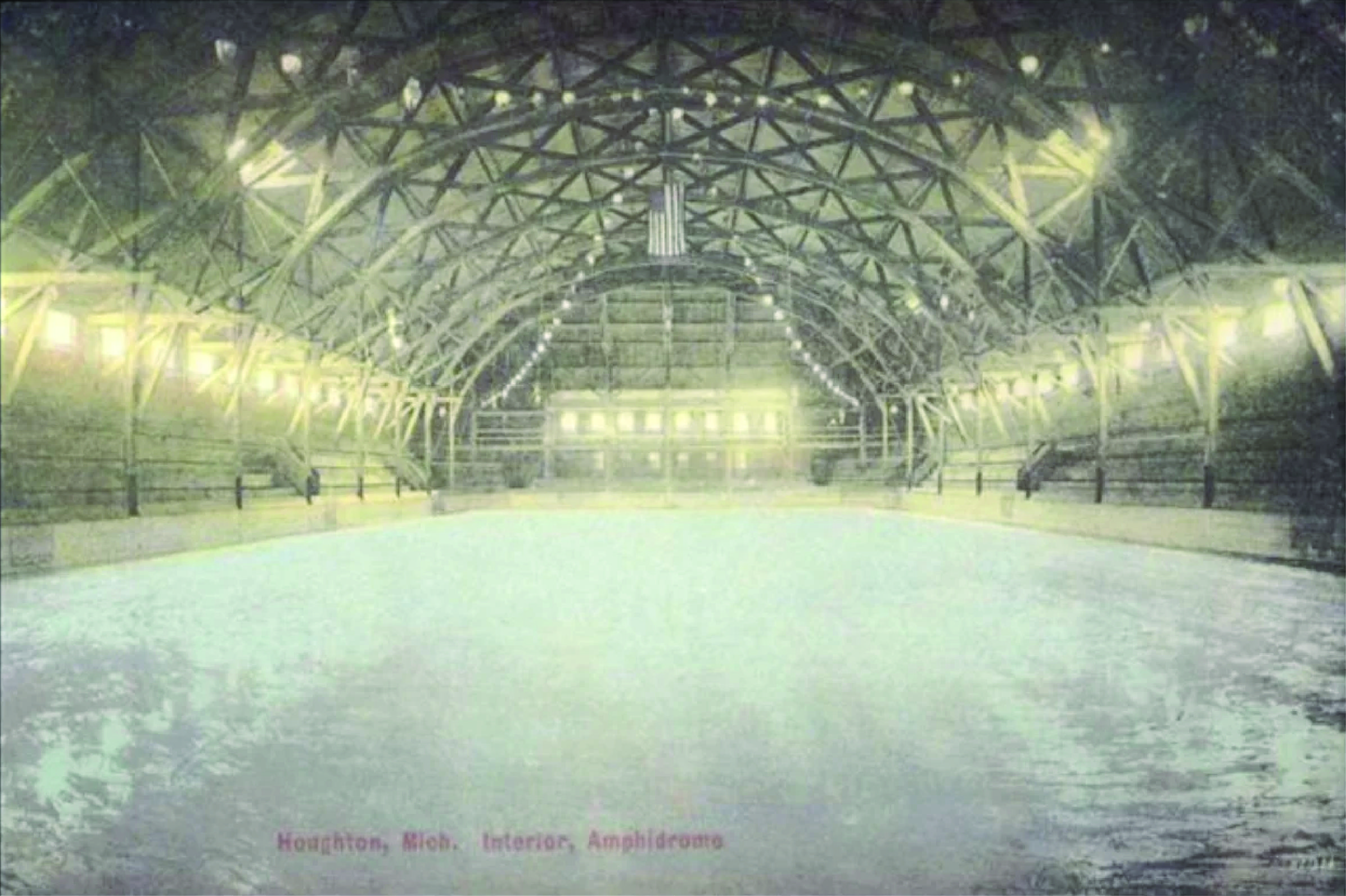
The Amphidrome was built in 1902 and later burned down in 1927. The fire destroyed a nearby warehouse as well as the equipment of the Portage Lakers.
After the loss of the Amphidrome, a replacemnet stadium was constructed called the New Amphidrome. James Dee assisted in financing the reconstruction.
The New Amphidrome was renamed the James R. "Dee" Ice Stadium in 1943 when the Michigan College of Mining and Technology (now Michigan Technological University) purchased it for their hockey team. Michigan Tech played their last hockey game in the Dee Stadium on December 4, 1971, after which they moved to the Student Ice Arena.
In 1974, the City of Houghton signed a 99-year lease for the Dee Stadium from Michigan Tech. In May 1983, the City of Houghton eliminated Dee Stadium from their annual budget due to financial reasons and the recent vandalism at the Dee Stadium. For awhile, the Dee Stadium was almost no more. After efforts from many community groups, the Dee Stadium became a neccesity to the local hockey in the area. In 1988, the City of Houghton purchased the Dee Stadium.
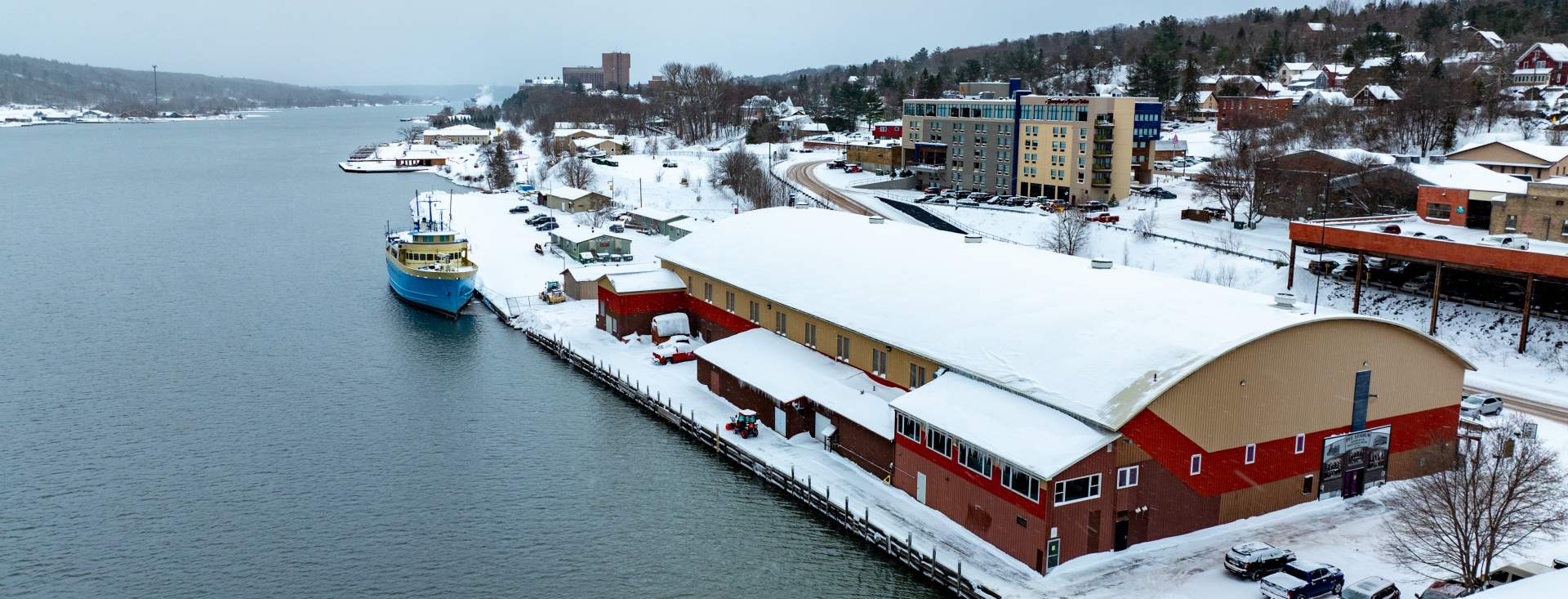
Learn more about the place the Pioneers call home 7 months out of the year:
Hockey's Historic Stronghold - The Dee Stadium
The gibson cup
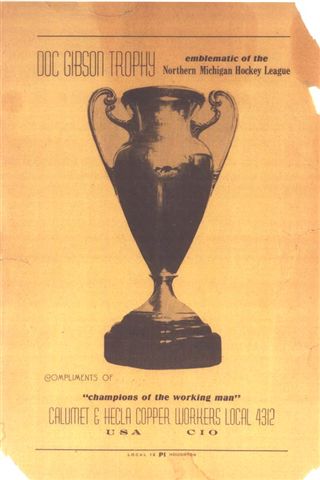
1939 The famous "Doc" Gibson Cup is one of the most coveted hockey trophies in the Midwest. It was created in 1938 for the Champion of the Northern Michigan-Ontario professional hockey league. According to the Daily Mining Gazette Feb 1939 article: "It stands 32 inches high, including pedestal, is silver plated in Butler grey finish with gilt lining. It is mounted on an ebonized pedestal, and the Cup proper is engraved at the top with the words "Doc Gibson Trophy", under which is an attractive etching of a hockey player in action and the word "Champions", under which the winners of the trophy are engraved. The trophy was purchased by the league with funds contributed by each of the five members of last year's association, which included the Portage Lakes, Calumet-Laurium, Marquette, Painesdale and Eagle River. The trophy was named in honor of Dr. John L. Gibson in recognition of his outstanding contribution to hockey in its infancy in the Copper Country..." The Cup itself measures 24 inches high without the base, it is 16 inches wide at the outside of the handles, and weighs 12 3/4 pounds; the wooden base is 14 inches square.
The Cup is named after Doctor John L. Gibson, who was a player-coach and leading scorer for the Portage Lake teams from 1900 to 1905 including the World's Champion Hockey Portage Lake Hockey team in 1904. Gibson then helped organize the World's first Professional Hockey League with 5 teams playing 3 seasons 1904-07: the Portage Lakes, Calumet, Soo America, Soo Canada and Pittsburg. Gibson was inducted into the US Hockey Hall of Fame in 1972.
The Gibson Cup, called the Stanley Cup of the North is the 3rd oldest Hockey Cup in the United States, only behind the 1893 Stanley Cup and the 1913 MacNaughton Cup (the Canadian Allan Cup was first awarded in 1908 ). A Daily Mining Gazette article in Feb 1939 said: Emil Schumacher, board of the League, appoints Doc Gibson Trophy Board of Trustees: to guide the destinies of the Doc Gibson Trophy of the Northern Michigan -Wisconsin Hockey league: "The Board will consist of five men, one representing each community supporting a team in the league, who have been active in the promotion and support of hockey over a long period of years. President Schumacher's appointments are: John W. Rice, Houghton-Hancock, chairman; Bernard Manderfield, - Painesdale, Phil Spear Jr. -Marquette; Gervase T. Murphy -Calumet-Laurium and E. E. Smith -Eagle River." In 1947, Schumacher was named to the board when Manderfield left the district; and at some later time, J. Harry Burris, Sault Ste. Marie was added.) The Gibson Cup trophy was given a new wooden base in 200- and so the trophy and base now stands 30 1/2 inches high.
Named after Hockey Hall of Famer, John L. (Doc) Gibson, the first captain and leading scorer of the Portage Lake Pro Team, it was destiny that the first team to win the Gibson Cup was the Portage Lake Team in the 1938-39 season! The American Sault Indians then won it three years in a row. Competition for the cup ceased during WWII. Calumet won the Cup for the first time in 1947, and the Portage Lake team in 1948. The Portage Lake - Calumet rivalry for the cup began in 1968, after a lapse of nearly 10 years when competition for the cup was inactive and on display at Tony Bukovich's Red Wings Lounge (now called the Downtowner Lounge next to the Bridge in Houghton.) In January of 1968, former Portage Lake player Mutty Wendberg and Head Coach Rod Paavola received the trophy from Bukovich and set up a 2 out of 3 game series with arch rival CLK Wolverines. The Wolverines won the series in 2 games. The next 2 years, Portage Lake won the Cup and brought it back down to the South end. In 1971 and 1972, the Wolverines won back-to-back series.
With the start up and entrance of the Copper Country Chief in the USHL Semi-Pro Hockey League, the two area teams, the Portage Lake Flyers and the Calumet Wolverines, disbanded, and with them, so did the play for the Cup. But in 1976, the Chiefs fell on financial hardship and senior hockey was started up again. Play for the Cup resumed between the North end CLK Wolverines and the South end Portage Lake Pioneers, with the Wolverines taking 3 straight series in 1980, 81, 82. Senior Hockey was again disbanded after the 1981-82 season and the Cup put in storage. Senior Hockey started again in 1995 with the Calumet Wolverines winning the 3rd game of the best of 3 series for the Gibson Cup. Each season since, the Gibson Cup has challenged for by Portage Lake Pioneers and Calumet Wolverines.
The memory of the famous "Doc" Gibson, considered the "father" of Copper Country hockey, is living on with these two fine senior hockey teams continuing to battle it out to claim the beautiful trophy named after Gibson.
Gibson Cup Winners